The art of piloting: Where leaders create the most value
Reading time: 5 min.
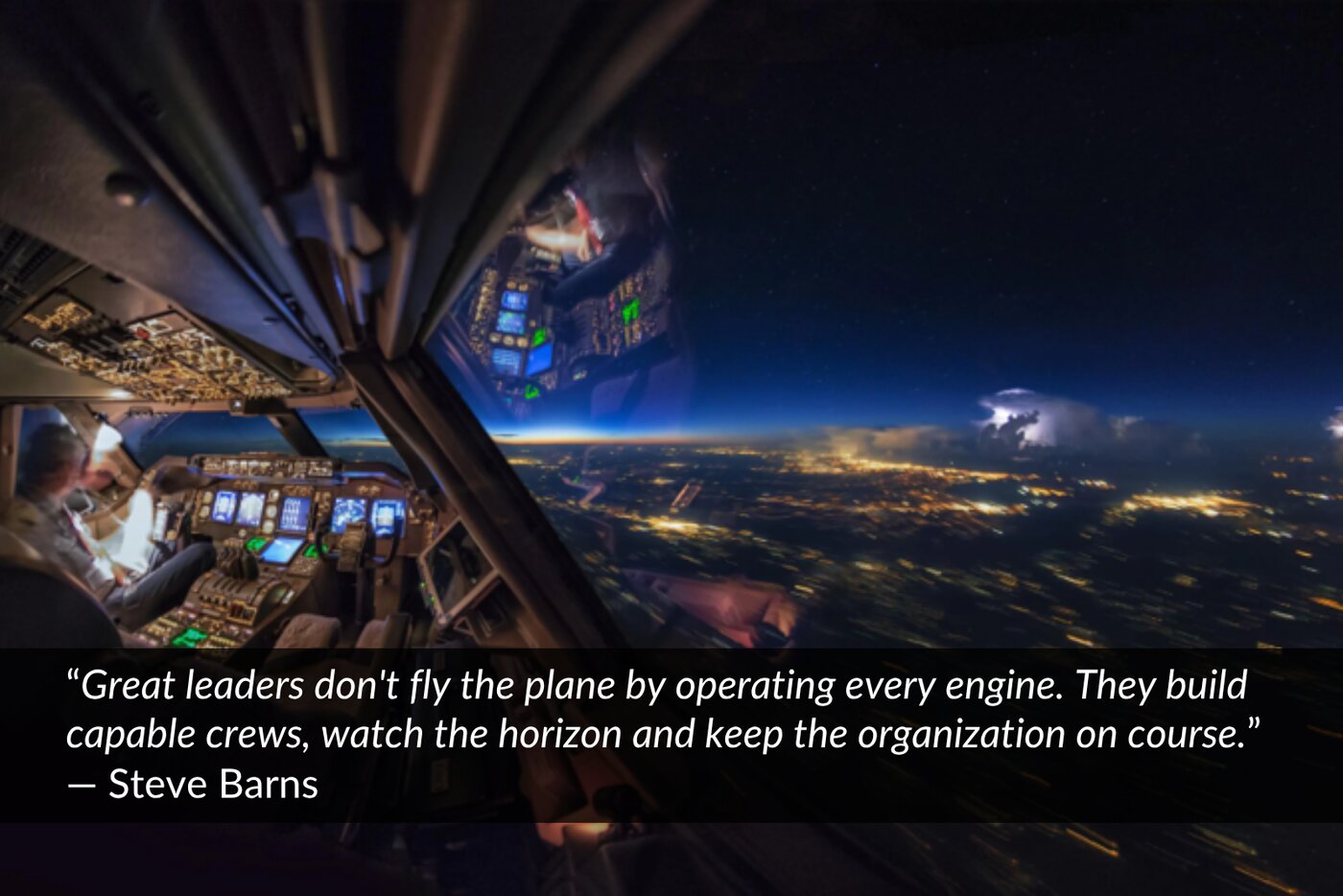
Imagine you’re piloting a B-52 bomber. Your aircraft is a complex machine, powered by multiple engines and supported by highly trained specialists. Your responsibility is to get it safely and effectively to its destination.
You have a flight plan, instruments monitoring the aircraft’s performance, a horizon to watch for changing conditions and a control tower to communicate with when circumstances require it.
Now imagine that every time an engine shows signs of trouble, you leave the controls to investigate. You check whether the mechanics are doing their jobs, help troubleshoot the issue and perhaps even start looking for replacement parts.
Who’s flying the plane?
This is a metaphor I frequently use when coaching business leaders. It illustrates a common leadership challenge: spending so much time managing operational problems that you neglect the responsibilities only you can fulfill.
Leading a business is a lot like piloting an aircraft
Think of your organization, division or department as an aircraft.
Its engines represent the functions under your responsibility. Operations, sales, finance, human resources and other essential teams must work together to keep the organization performing.
Your cockpit contains the instruments monitoring those engines: KPIs, operational dashboards, financial indicators and other measures of performance. Beyond your instruments lies the horizon, where changing market conditions, emerging opportunities and potential risks may require adjustments to your course.
Then there’s the control tower, representing your board, senior management or key stakeholders who may provide direction or help resolve issues beyond your authority.
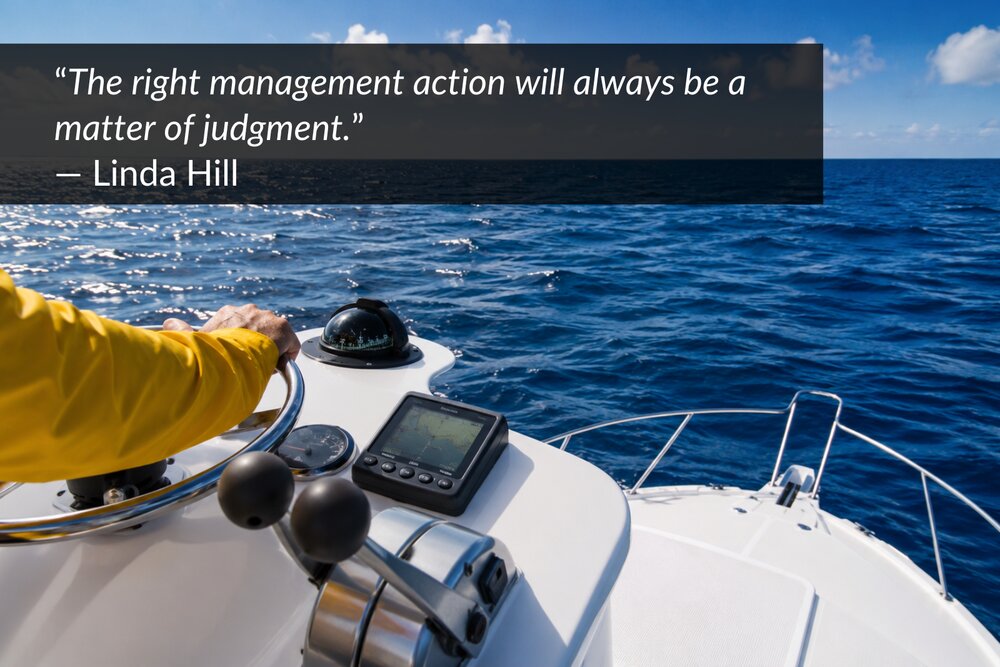
Your job as a leader is to pilot the aircraft, not personally operate every engine.
That doesn’t mean ignoring operational problems. Sometimes circumstances demand direct intervention. But there’s a difference between stepping in when necessary and becoming the permanent solution to problems your teams should be handling.
The importance of autonomous engines
Consider what happens when one of your performance indicators turns yellow.
Ideally, the manager responsible already knows there’s an issue, understands its implications and is working on corrective actions. You can trust that the situation is being managed.
If the indicator turns red, or the issue exceeds the manager’s authority or resources, you expect to be informed promptly so you can help remove obstacles, make decisions or engage other stakeholders.
You shouldn’t have to discover problems yourself, chase people for answers or routinely take over their resolution.
But that autonomy doesn’t happen by accident. It requires capable managers, clear accountability, meaningful performance indicators and agreed escalation protocols.
Developing that capability is an essential part of your job, and it creates the conditions for investing in three fundamental leadership disciplines.
1. Rise above operations to maintain perspective
A pilot constantly balances information from the instruments with what’s happening outside the aircraft. Focusing exclusively on either would be dangerous.
Leadership requires the same discipline.
You need to understand current performance while anticipating what lies ahead. Are your teams delivering expected results? Are there emerging risks? Is the organization adequately prepared for what’s coming? Are your priorities still appropriate?
Maintaining this perspective means seeing beyond individual operational problems to the systems that produce them. It also means resisting the temptation to solve everything personally.
When a manager brings you an issue, your instinct might be to provide the answer, particularly if you have more experience or expertise. But consistently doing so reinforces dependency rather than developing capability.
Sometimes the better response is to ask questions, clarify expectations, provide guidance and allow the manager to develop and execute a solution.
Your objective isn’t to become the best problem-solver in the organization. It’s to build an organization that can solve problems effectively without depending on you.
This requires patience, coaching and deliberate delegation. But every manager who becomes more capable and autonomous allows you to spend more time piloting and less time troubleshooting engines.
2. Communicate more to create alignment
One of the most underestimated responsibilities of leadership is communication.
Leaders often assume that because the direction is clear to them, it must also be clear to everyone else. Yet their teams don’t necessarily have the same visibility, context or understanding of the decisions being made.
Effective leaders regularly reinforce the organization’s purpose and mission. They explain priorities, contextualize decisions and help people understand how their work contributes to broader objectives. They don’t simply announce what needs to happen. They explain why it matters.
This becomes particularly important when circumstances change. A revised target or operational constraint may make perfect sense from the cockpit but appear arbitrary to those working in individual functions.
Communication bridges that gap.
It also means regularly checking whether people have what they need to succeed. Are expectations clear? Are there unresolved obstacles? Are decisions needed? Are resources aligned with priorities?
This is where leaders must distinguish between efficiency and effectiveness.
Efficiency focuses on doing things with minimal waste. Effectiveness asks whether we’re doing the right things to achieve the desired results.
Sometimes the most valuable contribution a leader can make isn’t accelerating execution. It’s questioning a process, resolving a cross-functional issue or realigning priorities before more effort is wasted.
Good communication creates the shared understanding that allows people to make better decisions independently.
3. Engage and develop the people who keep the engines running
The third discipline is often the first to suffer when leaders become consumed by daily operations: investing in their people.
When you’re constantly responding to problems, coaching and employee engagement become secondary priorities. Performance conversations happen only when something goes wrong, recognition becomes sporadic and one-on-ones are postponed to make room for urgent issues.
Yet building a strong team requires consistent attention, not occasional intervention.
Effective leaders recognize what people do well and reinforce behaviours that contribute to success. They provide regular feedback, encourage initiative and address performance issues early, before small problems become significant failures.
Regular one-on-ones are particularly valuable. They provide opportunities to review performance, identify obstacles, clarify expectations, recognize progress and course-correct before problems escalate.
When something isn’t working, effective leaders also resist two common temptations: micromanaging employees or compensating for poor performance by doing the work themselves. Neither approach builds accountability.
Empowerment means giving people the clarity, authority, resources and support to succeed while holding them accountable for results.
And when your direct reports are managers themselves, your responsibility extends beyond developing them personally. You must help them become effective leaders of their own teams.
The more capable your people become, the more effectively you can fulfill your leadership responsibilities.
Are you spending enough time piloting?
Think about how you’ve spent your time over the past two weeks.
How much was devoted to monitoring performance, anticipating challenges, aligning priorities, communicating direction and developing your people? And how much was spent resolving operational issues, chasing updates or making decisions others could have made?
Effective piloting doesn’t mean distancing yourself from daily operations. It requires staying informed, connected and ready to intervene when necessary. But it also requires the discipline to recognize where your contribution is most valuable.
Your job isn’t to keep every engine running personally. It’s to build and lead a system in which the engines perform reliably, the people responsible for them are capable and accountable, and the entire aircraft stays on course.
That’s where leaders create the most value.