

The art of piloting: Where leaders create the most value
Imagine you’re piloting a B-52 bomber. Your aircraft is a complex machine, powered by multiple engines and supported by highly trained specialists. Your responsibility is to get it safely and effectively to its destination. You have a flight plan, instruments monitoring the aircraft’s performance, a horizon to watch for changing conditions and a control tower…
Read more →
Are you still set up for success?
When someone takes on a new role, we usually ask whether they are set up for success. Do they understand what is expected? Do they have the right skills, resources and authority? Is the workload realistic? But there is a problem with that question: we tend to ask it at the beginning. Six months later,…
Read more →
Getting everyone rowing in the same direction: The overlooked job of leadership
It sounds almost too simple. Yet in business coaching and executive coaching, I keep seeing variations of the same problem: capable people working hard, but not necessarily working in the same direction. It may show up as slow decisions, duplicated effort, internal friction, missed handoffs, competing priorities or departments protecting their own interests. The symptoms…
Read more →
The management discipline behind effective AI
Artificial intelligence is changing how work gets done. But the management challenge underneath it is not new. Long before AI, leaders had to decide why a role existed, what it was responsible for, what outcomes it was expected to produce, where its authority started and stopped and how it interacted with other roles. They also…
Read more →
From Boss to Coach to Change Agent: The Evolution of the Modern Manager
For generations, being a manager largely meant knowing what needed to be done and making sure other people did it. That model is changing. Today, managers are expected to empower rather than control, coach rather than simply direct, develop people rather than just evaluate them and help their teams navigate constant change. Add hybrid work,…
Read more →
Strategic Thinking: The Leadership Skill Behind Better Decisions and Stronger Strategy
Strategic thinking is often associated with strategic planning. But they are not the same thing. A strategic plan defines where an organization intends to go and how it plans to get there. Strategic thinking happens before, during and beyond that process. It is the discipline of questioning assumptions, exploring possibilities and understanding implications before deciding…
Read more →
Why Understanding People Is the Foundation of Influence at Work
Dale Carnegie's How to Win Friends and Influence People has remained influential for nearly a century because it recognized something fundamental: if you want to influence someone, start by understanding what matters to them.
Read more →
Knowing your numbers is a leadership accelerator
One of the clearest differences between professionals who remain operational and those who become influential leaders is their understanding of the numbers that drive the business. Not just financial metrics. The numbers that explain performance, priorities, constraints, risks, efficiency, customer impact, delivery capacity, growth, quality, or strategic progress. At every level of an organization, people…
Read more →
The Leadership Paradoxes Managers Discover Too Late
A few years ago, I read Being the Boss: The 3 Imperatives for Becoming a Great Leader by Linda Hill. It fundamentally changed how I think about management. Not because it introduced radically new leadership techniques. But because it gave language to tensions I had already experienced for years without fully being able to describe…
Read more →
Leaders who don’t delegate undermine their own growth and their team’s productivity
Most leaders believe they delegate. They don’t. They either hold on to the work because it feels faster, or they hand it off but stay so involved that nothing really changes. Sometimes, they pass it along without enough clarity and end up redoing it altogether. In all three cases, the outcome is the same. They…
Read more →
Social Styles sharpens how you lead, coach, sell, and resolve conflict
Most professionals spend a large part of their day trying to influence others.They run meetings, give direction, ask for buy-in, push for decisions, manage tension. They do it with good intent and a lot of instinct. What’s missing is precision. The result is familiar:• Messages that land well with some people and fall flat with…
Read more →
Effective leaders separate the role from the person in performance review conversations
Performance conversations are among the most uncomfortable responsibilities of leadership. Not because leaders lack empathy or good intent, but because the conversation often becomes personal. It turns into a subtle tension between two individuals rather than a clear discussion about what the role requires and what is actually being delivered. When that happens, feedback becomes…
Read more →
Effective leaders know when to switch posture
Most leadership advice pushes you toward a style. Be more decisive.Empower your team.Coach instead of tell. The problem is not that this advice is wrong. It’s that it assumes consistency is the goal. It isn’t. Leadership effectiveness does not come from applying one approach well.It comes from applying the right posture at the right time.…
Read more →
Leaders don’t get the team they want. They get the team they build.
You’re entitled to the best team you can afford. But over time, you end up with the team you deserve. That may sound severe. It is also largely true. Not because leaders control everything. They do not. Market conditions matter. Hiring pools matter. Budget matters. Sometimes you inherit weak people, poor systems, or a culture…
Read more →
Why time management so often fails us and what actually works
Most people do not have a time management problem. They have a priority protection problem. That distinction matters. Because most productivity advice focuses on doing more, moving faster, or finding the perfect system. But many professionals already know what matters. They start the day with good intentions. They may even identify their top three priorities.…
Read more →
Negotiating your own worth by overcoming the three most common barriers
At some point, almost everyone faces a negotiation about their own value. It may be asking for a raise, negotiating a salary, discussing a promotion, setting your consulting rate, negotiating a severance package, or even selling something on an online marketplace. Yet many capable professionals struggle in these situations. They hesitate to ask. They accept…
Read more →
Why we procrastinate on what matters most and how to break the cycle
You don’t procrastinate because you are lazy. You procrastinate because something about the task feels psychologically unsafe. Notice what you tend to delay: • Preparing your personal taxes• Finalizing your yearly department budget• Conducting a performance review with an underperforming employee• Writing a long, high-stakes RFP• Initiating a difficult strategic conversation These tasks matter. They…
Read more →
The compounding power of insight and action
Most leaders are not short on ideas. They read. They attend conferences. They exchange perspectives with smart peers. They leave conversations with clarity and conviction about what needs to change. And yet, months later, very little actually has. Not because the insight was wrong. Not because the leader lacked intelligence. But because insight alone does…
Read more →
How to manage interpretation and reduce conflict in communication
We like to believe that if we express an idea clearly, others will understand it clearly. They won’t. Because we control what we attempt to say.We do not control how others construct meaning from it. Communication is not transmission. It is interpretation. And most conflict does not begin with what was said. It begins with…
Read more →
Building and celebrating team resilience in times of change and uncertainty
Change is rarely what destabilizes teams.Uncertainty is. Most organizational changes do not immediately threaten people’s jobs, competence, or value. Yet the moment clarity disappears, stress rises, focus narrows, and team dynamics quietly shift. This is not a failure of mindset or maturity. It is a predictable human response. Understanding this distinction is the first step…
Read more →
Tackling the five dysfunctions of a team to boost business performance
In today’s organizations, we often call any group of people a “team” simply because they work together and share a goal. That definition is dangerously incomplete. In sports or in the Army, a team is not defined by proximity or a shared objective. It is defined by team spirit. Mutual support. Trust under pressure. Willingness…
Read more →
The Culture Code: a leadership lever for team productivity
Most teams already have a culture. The problem is that many of them never chose it. When culture is left undefined, it does not stay neutral. It quietly forms through habits, shortcuts, tolerated behaviors, and unspoken rules. Over time, this invisible culture shapes how people collaborate, make decisions, handle conflict, and show up when pressure…
Read more →
Why self-awareness is a performance skill, not a soft one
Most performance issues at work are not caused by a lack of intelligence, motivation, or technical skill. They are caused by misalignment. Misalignment between who someone is and what their role demands.Misalignment between natural ways of thinking and behaving and the expectations of managers, peers, or clients.Misalignment between effort and energy. Self-awareness is what allows…
Read more →
Three simple practices to manage stress, stay grounded, and improve decision-making
Most professionals do not struggle because they lack intelligence, motivation, or discipline.They struggle because their days are run at a speed where reactions happen faster than choices. A tense email.A rushed meeting.A comment that lands wrong. Before you know it, you are responding on autopilot. The tone is sharper than intended. The decision is rushed.…
Read more →
Habits: the overlooked skill that quietly shapes your success
Every January, we talk about goals.What we rarely talk about is the skill that actually determines whether those goals will ever materialize. That skill is forming habits. Not productivity hacks.Not motivation.Not willpower. Habits. At work and in life, the most sudden and durable progress rarely comes from doing more. It comes from adjusting what you…
Read more →
Three simple, science-grounded reflection questions to close the year with clarity
As the year comes to a close, many of us feel the urge to slow down and take stock. And yet, we rarely do it well. We either skip reflection altogether or turn it into a vague mental recap that quickly dissolves into plans for what’s next. What often gets lost in the process is…
Read more →
Why trust is the hidden engine of high-performing teams
Trust is the quiet force that makes collaboration possible. It shapes how teams communicate, solve problems, take risks, and show up for one another. When trust is high, work flows. When trust is weak, friction becomes the default operating system.Yet trust is often assumed rather than cultivated. It is treated as something teams “have” instead…
Read more →
Accountability is the real engine of performance that drives growth
Most leaders agree that accountability matters. Few understand just how much it determines performance, profitability, and long-term success. And even fewer know how to build it. Accountability is not a soft concept. It is a behavioural and cultural system that determines whether a company scales or stalls. It is also one of the biggest sources…
Read more →
Why understanding your pattern of success unlocks performance and growth
Most people underestimate how much of their success is repeatable. They assume it was luck, timing, or the right project. Yet behind every strong performance, there’s a pattern. You’ve developed it partly consciously, partly unconsciously, and refined it through experience until it became your default way of succeeding. The problem is that few people ever…
Read more →
Top performers are crystal clear about what their job is, and what it’s not
Few people have an up-to-date job description. Yet, every year, most organizations conduct performance reviews as if those documents existed and reflected reality. Over time, as processes shift and colleagues come and go, responsibilities morph. A temporary favour turns into a permanent duty. A “helping hand” becomes part of someone’s daily routine. Eventually, the original…
Read more →
Why effective leadership outlasts conventional leadership, and why both still matter
We often treat effective leadership as the gold standard. It is thoughtful, sustainable and built around people and purpose. But the truth is that even the most effective leadership can fail when it is applied at the wrong time. Leadership isn’t one posture. It is a balance of stances, and knowing when to lean on…
Read more →
The invisible expectations that hold you and your team back
Most leaders judge their team’s performance through a lens they rarely name out loud: their own expectations. Not expectations written in job descriptions or SMART goals, but deeply personal, often unspoken standards. Things like how quickly an email should be answered, how polished a slide deck should be, or how collaborative a teammate should be…
Read more →
Why employee engagement is an underrated superpower many leaders ignore
You can optimize your cost structure, pivot your strategy, and launch new initiatives, but if your people aren’t emotionally and cognitively “all in,” you’ll never capture full value. What if the highest-leverage ROI decision you could make this year wasn’t a product launch or AI investment, but ensuring your people feel appreciated, clear on purpose,…
Read more →
The three dimensions of effective leadership
Leadership advice has become a crowded space. One week it’s about vulnerability, the next it’s about decisiveness, and the week after that it’s about servant leadership. Leaders can feel like they’re chasing a moving target. Yet when you strip away the trends and look at decades of serious research — from Peter Drucker’s writings on…
Read more →
SCRAP: a simple framework to stay rational and solution-oriented under pressure
There are moments in work life when emotions run high. A stakeholder is upset about a delay. A colleague is pointing fingers. A client is impatient for answers. And there are other moments that feel just as tense: when you need to give constructive feedback, raise a concern, or present a counter-argument to your manager…
Read more →
Your calendar is not a to-do list: how to take back your schedule
There’s a reason you feel behind, even when you’re working non-stop. It’s not that you’re disorganized. It’s that your time is up for grabs. Your calendar isn’t just a shared planning tool. It’s a window into your priorities. And if you don’t claim time for your own work, others will, meeting by meeting, request by…
Read more →
Demystifying Constructive Feedback: An Everyday Act of Care and Growth
Why feedback feels so uncomfortable When most people hear feedback, they imagine tough conversations—correcting mistakes or delivering criticism. Naturally, that anticipation brings tension. But feedback doesn’t have to be heavy. It can begin with a caring observation—a simple, compassionate comment that says: I want things to be better—for you, for me, for the team. Giving…
Read more →
Managing stress to protect performance and prevent exhaustion
Stress is a constant companion in today’s workplace. It shows up in deadlines, demanding clients, shifting priorities, and the inner voice that questions whether we are doing enough. For leaders and employees alike, managing stress throughout the day is not just about feeling better. It is about sustaining performance, making better decisions, and avoiding the…
Read more →
Avoid these 5 most common mistakes managers make in one-on-one meetings
Employee productivity is directly tied to engagement. And the single biggest factor shaping engagement is the relationship between an employee and their manager. The problem is, most managers underestimate their influence on engagement and are rarely equipped to use one-on-ones to strengthen it. “Managers account for at least 70% of variance in employee engagement scores.”…
Read more →
Lead your AI like you lead your team: clarity, context, and feedback matter
Generative AI might be the most powerful assistant you’ll ever have.But like any assistant — or any member of your team — it can’t read your mind. If you want it to perform at its best, you have to lead it like you would a person. That means providing clear direction.That means giving it context.That…
Read more →
You’re selling all the time (whether you like it or not)
It starts early. You’re in the kitchen. It’s 6:45 a.m. Your 6-year-old walks in, eyes still half-shut, and says, “Mom, I think we should skip school today. I’ve been working really hard. I even helped clean up my sister’s mess yesterday. Plus, we never get pancakes on weekdays.” There it is. Framed argument. Social proof.…
Read more →
How to engineer epiphanies with the Most Important Question (MIQ) Technic.
Thomas Edison is widely credited with saying: “Never go to sleep without a request to your subconscious.” Whether or not he said it exactly that way, the wisdom holds. What if you could wake up with the kind of insights that feel like sudden “Aha!” moments—those flashes of clarity that untangle complex decisions, resolve conflicts,…
Read more →
What your peace of mind on vacation says about your leadership
It is summer vacation season, and for many leaders, this period reveals an uncomfortable truth: how much do you really trust your team when you step away? Do you leave for vacation with a sense of confidence, knowing “the shop” will run smoothly in your absence? Or do you pack your laptop, plan to check…
Read more →
How to regain control when drowning in shifting priorities at work? Use this simple prioritization lens to resurface.
You’re not imagining it, everything really is coming at you faster. One minute you’re planning your day. The next, your inbox explodes, a team member needs input, your boss shifts priorities again, and your to-do list mutates beyond recognition. You’re working hard. You’re always “on.” And yet, the feeling persists: I’m not getting to what…
Read more →
The shift from Doing to Leading: understanding the untold rules of Management success
There’s an invisible line many managers cross—sometimes unknowingly—that marks the shift from being recognized for what you do to being judged by what you enable. Cross it without understanding the rules, and you might hit a ceiling you can’t quite explain. The truth is, the higher you rise, the less your personal output alone matters.…
Read more →
Why so many great leaders have a coach (and why it might be time you do too)
Everyone agrees leadership matters. It drives performance, fosters innovation, and creates cultures where people thrive. Yet when it comes to investing in leadership development, many still hesitate—especially when it comes to executive coaching. There’s this persistent misconception: Coaching is only for leaders who are struggling. Or worse, that it’s a remedial fix—a last resort for…
Read more →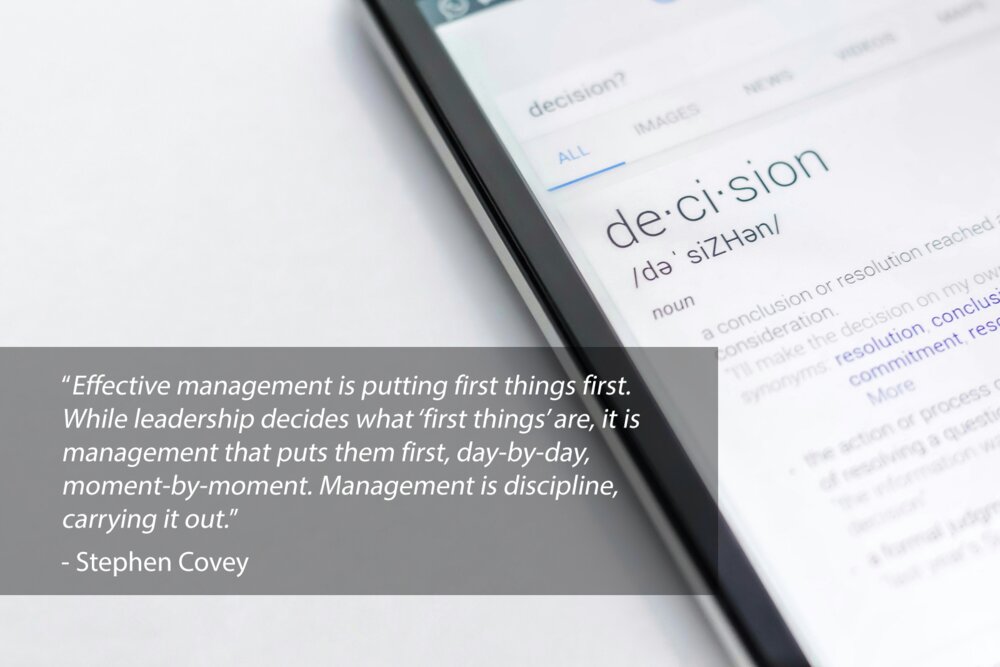
9 Rules of Effective Leadership (and why so few follow them)
Ask anyone in business what they wish they had more of, and you’ll hear some variation of the same things: more time, more support, more clarity, more results. What’s behind all of that? More effective leadership. Whether you’re a VP in a large enterprise or the owner of a growing SMB, effective leadership is not…
Read more →
From Entrepreneur to Growth Accelerator: Supporting Leaders, Scaling Companies
Over the past few years, I’ve transitioned from agency founder to executive coach, management consultant, and increasingly, a strategic advisor to business owners looking to scale. While I continue to coach leaders and align teams, a growing focus of my work is helping small and medium-sized companies prepare for expansion, structure for sustainability, and build…
Read more →
Don’t wish, do!
Wishing for something you want is a sure way to not getting what you want. When wishing for something meaningful you tend to focus on what you want rather than on how you’ll get it. You think about the beautiful vistas you’ll see at the top of the mountain, rather than the arduous yet more…
Read more →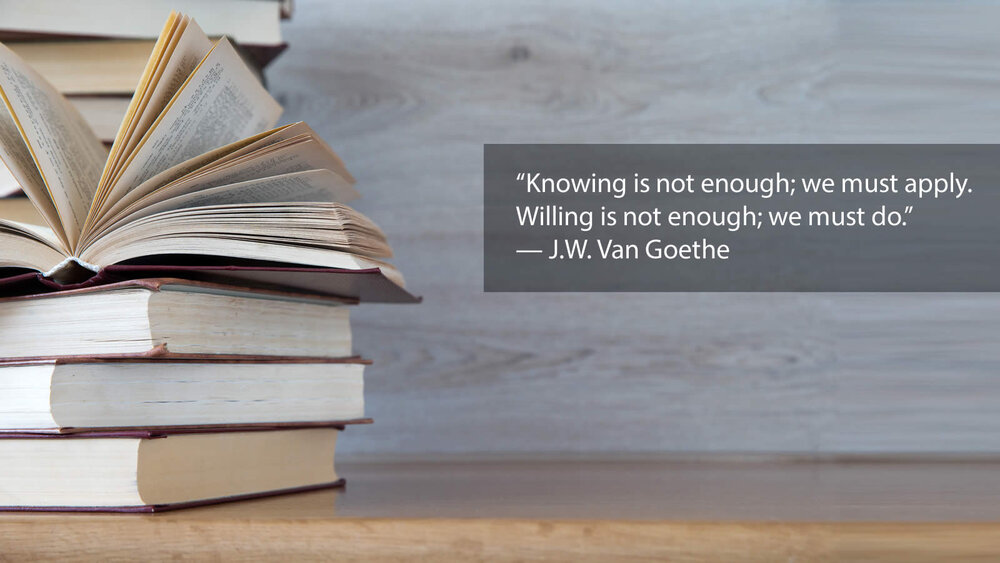
Knowledge alone is not enough for success in life and in business
“Knowing is not enough; we must apply. Willing is not enough; we must do.”— J.W. Van Goethe It’s all out there! From timeless lessons on how to live and be successful that have been around for millenniums, to thoroughly documented sales, marketing & management practices supported by at least three generations of business pundits to be…
Read more →
Breaking down the equation for “overnight success”
“Timing, perseverance and 10 years of really hard work will eventually make you look like an overnight success.” — Biz Stone. There is no overnight success without an exceptional background story. The saying goes that it takes 10 years, at least, to be an “overnight success”. Another one is that it takes 7 failures to make it…
Read more →
Trust is the only currency for success in business (and in life)
“Everything has to be taken on trust; trust is only that what is taken to be true. It’s the currency of living. There may be nothing behind it, but it doesn’t make any difference so long as it is honoured.” — Tom Stoppard I’ve been reflecting lately on what, against all odds, has enabled me to be…
Read more →
No articles match your search.