The Leadership Paradoxes Managers Discover Too Late
Reading time: 6 min.
A few years ago, I read Being the Boss: The 3 Imperatives for Becoming a Great Leader by Linda Hill.
It fundamentally changed how I think about management.
Not because it introduced radically new leadership techniques. But because it gave language to tensions I had already experienced for years without fully being able to describe them.
Like many managers, I had already navigated these situations intuitively.
• When to step in versus step back
• When to prioritize people versus performance
• When to create structure versus flexibility
• When to push harder versus slow things down
• When to maintain alignment versus encourage debate
• When to project confidence versus admit uncertainty
I understood the experience of leadership complexity.
What I lacked was a map.
And that matters more than most people realize.
Being the Boss is frequently cited among the strongest management and leadership books of the last decade, and for good reason. Unlike many leadership books that simplify management into formulas or personality traits, Linda Hill approaches management as a series of enduring paradoxes that sit at the core of the role itself.
Not problems to permanently solve. Tensions to continuously navigate.
That distinction is incredibly important because many leaders unknowingly create additional stress for themselves by assuming these contradictions should eventually disappear.
They do not.
In fact, as Hill writes, these paradoxes define the fundamental nature of management.
Why Leadership Often Feels Mentally Exhausting
Most managers operate inside competing expectations all day long.
They are expected to:
• Empower employees while maintaining accountability
• Move quickly while minimizing risk
• Support people while driving performance
• Stay strategic while remaining operational
• Encourage innovation while preserving stability
• Build trust while addressing difficult issues
• Create consistency while adapting to change
Many leaders interpret these tensions as evidence that something is wrong.
“If leadership feels contradictory, maybe I’m handling it poorly.”
But the contradiction is often built into the role itself.
That realization can completely change how someone experiences leadership.
Because once you understand that management is inherently paradoxical, you stop searching for perfect formulas and start developing better judgment instead.
That shift matters.
It reduces unnecessary emotional friction. It improves decision-making. And it creates a more grounded understanding of what leadership actually requires.
The Hidden Cost of Managing Without a Map
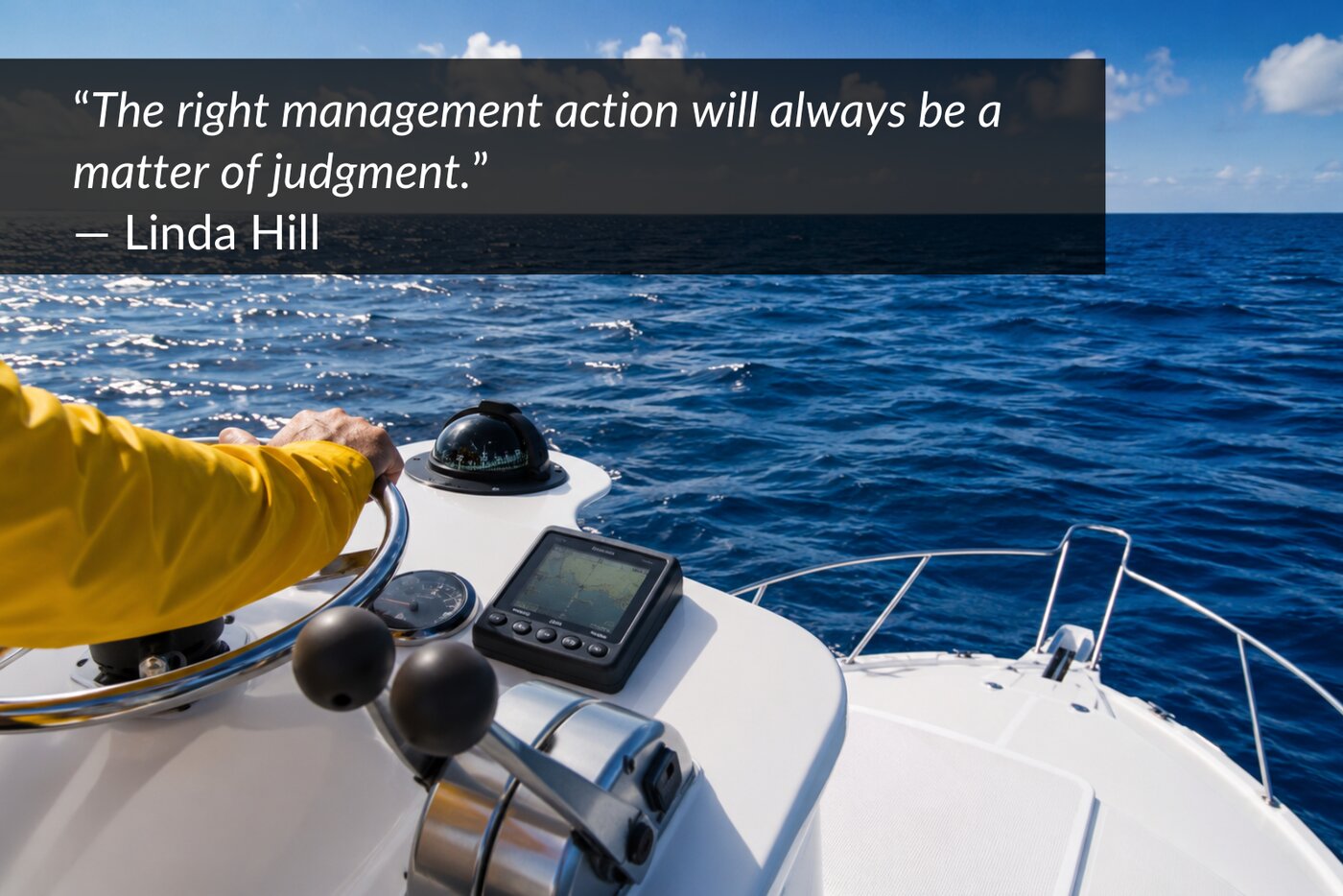
Imagine trying to navigate the ocean without understanding:
• Currents
• Weather systems
• Wind patterns
• Navigation tools
• Crew dynamics
You may still survive through instinct and experience.
But your decisions become more reactive, more emotionally draining, and less deliberate.
That is how many managers operate. They feel recurring tensions but cannot clearly identify or categorize them.
As a result:
• They overcorrect
• They swing between extremes
• They become rigid under pressure
• They personalize structural tensions
• They burn mental energy trying to eliminate unavoidable tradeoffs
Naming paradoxes creates clarity. And clarity changes behavior.
When leaders can recognize the type of tension they are facing, they become more capable of responding intentionally instead of reacting emotionally.
The Leadership Paradoxes Most Managers Eventually Face
You Are Accountable for Work You Do Not Directly Control
One of the hardest transitions in management is realizing your success now depends largely on the performance of others.
As an individual contributor, effort and results are closely connected.
As a manager, they are not.
You are responsible for outcomes you cannot fully control.
That creates permanent tension between:
• Accountability
• Dependence on others
Many new managers struggle because they unconsciously continue trying to operate like high-performing individual contributors.
But management requires influence, coordination, coaching, communication, and trust.
Not just execution.
To Improve Performance, You Must Focus on People, Not Just the Work
Many managers believe they manage work. In reality, they manage the people doing the work.
And modern work increasingly depends on:
• Judgment
• Motivation
• Collaboration
• Creativity
• Engagement
You cannot separate performance from the human beings producing it.
This creates tension because operational pressure often pushes leaders toward tasks, deadlines, metrics, and deliverables while neglecting the relational side of leadership.
But disengaged people rarely produce exceptional work for long.
Strong managers understand that performance is often achieved through people, not around them.
You Must Develop People While Also Evaluating Them
This may be one of the most emotionally difficult paradoxes in management.
Leaders are expected to:
• Coach people
• Support growth
• Encourage development
• Build confidence
But they must also:
• Evaluate performance
• Address weaknesses
• Make difficult personnel decisions
• Sometimes remove people from roles
That creates an uncomfortable dual role:
part coach, part judge.
Many leaders over-index toward one side. Some become overly accommodating and avoid accountability. Others become excessively evaluative and undermine trust and development.
Strong management requires balancing both responsibilities simultaneously.
Strong Teams Need Cohesion and Individuality
Teams need alignment and shared purpose.
But high-performing teams also require diversity:
• Different perspectives
• Different experiences
• Different personalities
• Different ways of thinking
Too much cohesion can quietly produce conformity. Too much individuality can weaken collaboration and trust.
Managers constantly navigate the tension between creating unity and preserving healthy differences.
That balance becomes even more important in organizations trying to encourage innovation and adaptability.
You Must Manage Beyond Your Formal Authority
Many managers initially believe their role is primarily about managing their direct team.
But organizational success rarely works that way.
Leaders must constantly influence beyond their formal scope:
• Peers
• Senior leaders
• Stakeholders
• Clients
• Other departments
This often surprises newer managers because authority alone is rarely enough to move organizations effectively.
Modern leadership depends heavily on influence without direct control.
You Must Balance Today’s Pressures With Tomorrow’s Needs
Operational pressure is relentless.
Managers face:
• Deadlines
• Revenue targets
• Staffing issues
• Client demands
• Operational problems
At the same time, leaders must also prepare for the future through:
• Capability building
• Talent development
• Strategic thinking
• Process improvement
• Innovation
The urgent constantly competes with the important. And many organizations unintentionally reward short-term execution at the expense of long-term sustainability.
One of leadership’s hardest disciplines is protecting tomorrow while managing today.
You Must Preserve Stability While Driving Change
Organizations need consistency.
People need clarity, structure, predictability, and continuity. But organizations also need adaptation.
They must evolve, improve, innovate, and respond to changing realities.
Leaders therefore face a permanent tension between:
• Stability
• Change
Between:
• Execution
• Innovation
And between:
• Continuity
• Transformation
The challenge is not choosing one side permanently.
The challenge is knowing which side requires more emphasis in a specific context.
Leadership Sometimes Requires Painful Decisions
This is one of the least discussed realities of management.
Leadership decisions sometimes create harm even when the broader intention is positive.
Examples include:
• Layoffs
• Budget cuts
• Promotions that disappoint others
• Strategic shifts that affect teams negatively
• Accountability decisions that strain relationships
These situations are emotionally difficult because leadership decisions affect real people.
Many managers underestimate the emotional burden associated with responsibility and authority. But avoiding difficult decisions can create even greater organizational harm over time.
This is why leadership requires not only analytical capability, but also emotional maturity and strong personal values.
Why Self-Awareness Matters So Much
One of the most powerful insights from Linda Hill’s work is that every leader naturally defaults toward one side of these paradoxes.
Some leaders naturally prioritize:
• Harmony over accountability
• Execution over development
• Stability over innovation
• Autonomy over structure
Others lean the opposite direction.
These default tendencies gradually become leadership style. And if leaders are unaware of those tendencies, they often apply the same responses regardless of context.
That is where many leadership problems begin.
Management requires self-awareness because good judgment depends on recognizing:
• Your biases
• Your instincts
• Your comfort zones
• Your habitual overcorrections
The goal is not to become perfectly balanced at all times. The goal is to become intentional.
Leadership Is Navigation, Not Certainty
One of the biggest misconceptions about management is that strong leaders always know the right answer.
In reality, experienced leaders often do something more nuanced.
They:
• Assess context carefully
• Recognize competing priorities
• Understand the risks on both sides
• Adjust their stance intentionally
• Recalibrate as conditions evolve
That is not weakness.That is leadership maturity.
The best managers are not people who eliminate contradictions. They are people who learn how to navigate them without becoming emotionally overwhelmed or intellectually rigid.
That is why I continue recommending Linda Hill’s Being the Boss so strongly.
Not because it simplifies management. But because it helps leaders understand the terrain they are actually operating in.
And once you can name the currents, leadership becomes much easier to navigate.