Everyone agrees leadership matters. It drives performance, fosters innovation, and creates cultures where people thrive.
Yet when it comes to investing in leadership development, many still hesitate—especially when it comes to executive coaching.
There’s this persistent misconception: Coaching is only for leaders who are struggling. Or worse, that it’s a remedial fix—a last resort for underperformers.
But here’s the truth: the vast majority of high-performing leaders I’ve worked with are ambitious, driven, and self-aware enough to know they don’t have all the answers. Coaching isn’t a crutch. It’s a performance tool.
Eric Schmidt, former CEO of Google, famously said:
“The best advice I ever got was to have a coach.”
“Every famous athlete, every famous performer has somebody who’s a coach—somebody who can watch what they’re doing and say, ‘Is that what you really meant?’”
The same logic applies to leadership. Coaching offers leaders space to reflect, think strategically, improve decision-making, and lead with intention rather than reaction.
Coaching isn’t therapy. It’s Leadership infrastructure.
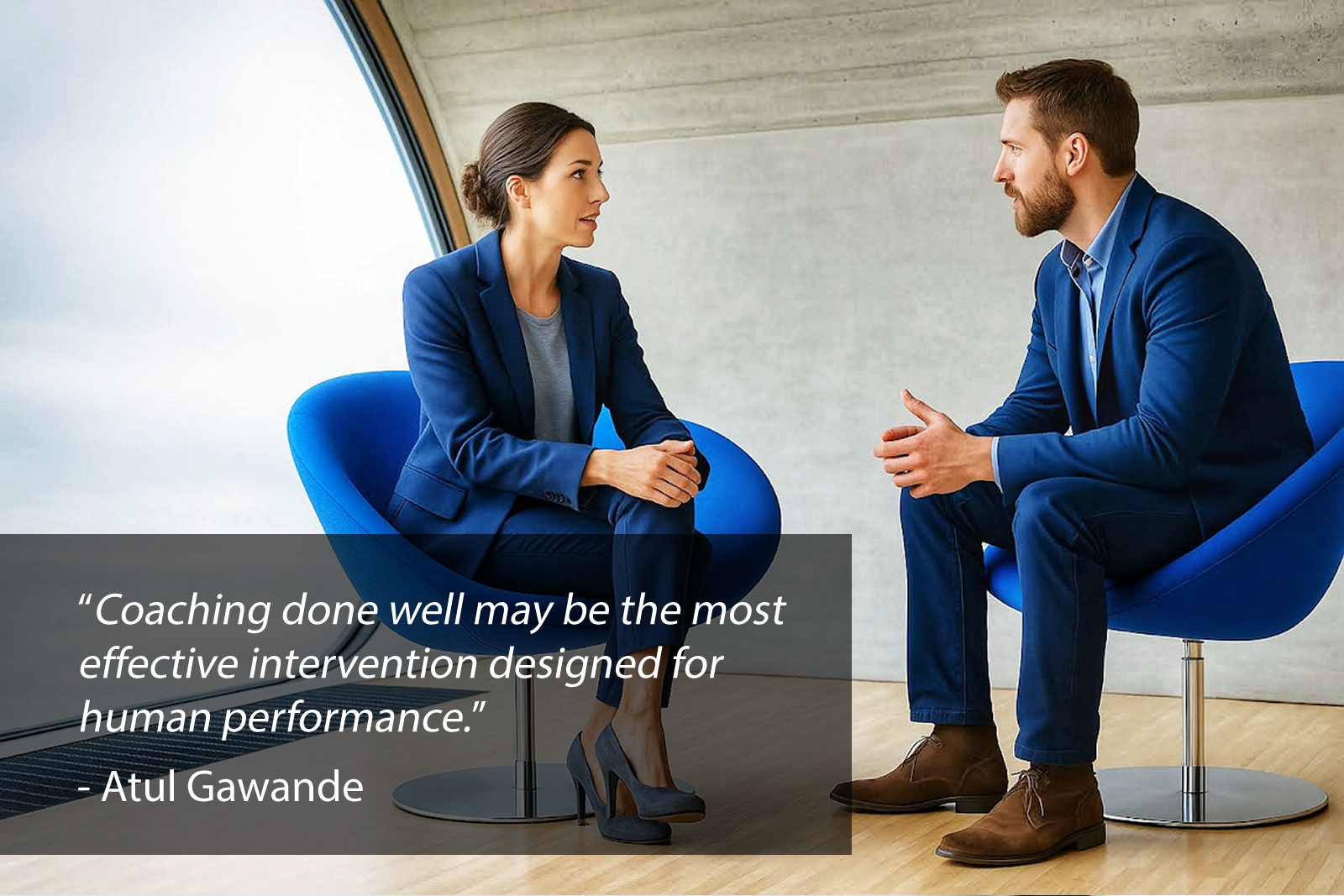
Let’s be clear: coaching isn’t therapy, and it’s not training. It’s a partnership designed to challenge your thinking, clarify your priorities, and accelerate your growth as both a leader and business manager.
In today’s world, where leaders are drowning in meetings, decisions, and distractions, the ability to step back, think clearly, and act strategically isn’t just nice to have—it’s a competitive advantage.
In fact, some of the most successful businesses I’ve worked with didn’t just invest in coaching for the CEO—they extended it to their leadership team. Because when you scale leadership, you scale execution, alignment, and ultimately, performance.
One idea. One shift. One million dollars.
Let me share a quick story.
One of my clients—let’s call him Tim—runs a fast-growing services business. In one of our early sessions, I asked him to implement something simple but powerful: take one day a week out of the office. No meetings. No phone calls unless for “real top-tier emergencies”. Just time to think, reflect, review data and financials, read and get new ideas, whatever which is not solving day-to-day operational problems.
It felt counterintuitive. He was busy, overwhelmed even. But that was the point.
A few weeks in, while driving back from the bank, Tim saw a message on a billboard and had an idea. A simple but powerful $1M idea (we did the math on the value and tangibility of the idea). When I asked him later whether he would’ve had that idea before we started working together, he replied:
“I’ve had tons of ideas like this. I just never had the time or space to act on them. I’d forget, get distracted, or move on to the next fire.”
This time was different. Because of the systems we had built—dedicated time for working on the business, not just in it—he was able to sketch the idea, get input, and start executing within 48 hours.
That kind of agility? That’s what coaching creates. Space. Focus. Follow-through.
10 ways coaching creates real value for leaders and teams
Whether you’re a founder/owner, executive, or department head, here’s what coaching can unlock:
- Clearer thinking
You can’t lead well if you’re always reacting. Coaching helps leaders pause, reflect, and make decisions with clarity. - Strategic focus
It’s easy to get stuck in the weeds. Coaching brings you back to what matters most—long-term priorities, not just short-term urgencies. - Faster, better decisions
A sounding board who challenges your thinking leads to sharper, more confident choices—especially under pressure. - More effective delegation
Many leaders carry too much. Coaching helps you let go of what’s not yours to hold and empower others instead. - Time management mastery
Leaders I work with often reclaim 5–10 hours a week—simply by eliminating noise and re-prioritizing. - Greater agility
As Tim’s story shows, it’s not just about having good ideas—it’s about having the capacity to act on them. - Improved team leadership
Coaching sharpens your ability to lead others timely with clarity, empathy, and accountability. - Courage to make the hard calls
Leadership isn’t about doing what’s easy—it’s about doing what’s necessary. Coaching helps leaders develop the clarity and conviction to make tough decisions, have difficult conversations, and act on what needs to be done—regardless of how they feel in the moment. - Increased self-awareness
You learn to spot your patterns—what drives you, what holds you back, and what your team needs most from you. - Scalable leadership across the org
When your direct reports receive coaching too, the benefits multiply: better alignment, fewer bottlenecks, and more shared ownership.
The ROI of coaching Is real—and often undervalued
What’s the value of a better decision? A clearer strategy? A team that finally clicks?
Hard to measure, but easy to feel. Most of my clients will tell you it’s invaluable.
Here’s what I often remind skeptical leaders:
- The value of just one great idea can pay for a year of coaching.
- The ability to delegate and free up your calendar? That’s hours of leadership leverage weekly.
- The compounding effect of thinking strategically, every single week, is hard to overstate.
- And let’s not forget: the value of taking courageous action.
When a leader finally addresses a persistent underperformer or makes the tough call they’ve been avoiding, the time and energy saved—and the clarity it brings to the rest of the team—often translates into real financial outcomes. Left unchecked, these issues drain productivity, morale, and momentum. Coaching helps leaders step into those hard conversations and decisions with confidence and clarity.
Coaching is one of the rare investments where the upside isn’t just personal—it’s organizational.
I’ve had a coach every week for over a decade
I’ve been coached almost every week for more than 10 years. I’ve also had mentors since the early days of my career—25+ years ago. And I wouldn’t have it any other way.
Some weeks, coaching feels like fuel. Other times, it feels like a mirror. And sometimes, it’s the gentle nudge I need to get out of my own way.
It’s what helps me keep growing, evolving, and showing up better for the leaders I coach.
So if you’re a leader who’s ambitious, self-aware, and serious about growth—ask yourself:
“What would change if I had time to think, a partner to challenge me and get me going faster, and a system to stay focused on what really matters?”
And then consider this:
“Everyone needs a coach. It doesn’t matter whether you’re a basketball player, a tennis player, a gymnast, or a bridge player.”
— Bill Gates
In today’s world, leadership is too complex to do alone. So why would you?